T1 Energy Inc. (TE): Outlook on Core Growth Engines, Emerging Risks, Bull vs Bear Case, and Long-Term Investor Value

Thank you for reading this post, don't forget to subscribe!
Disclaimer: This content is provided for informational and educational purposes only and should not be considered investment advice, financial advice, or a recommendation to buy or sell any security. Investors should conduct their own research and consult a qualified financial advisor before making investment decisions. Past performance does not guarantee future results, and all investments involve risk, including the potential loss of principal.
Investor Value
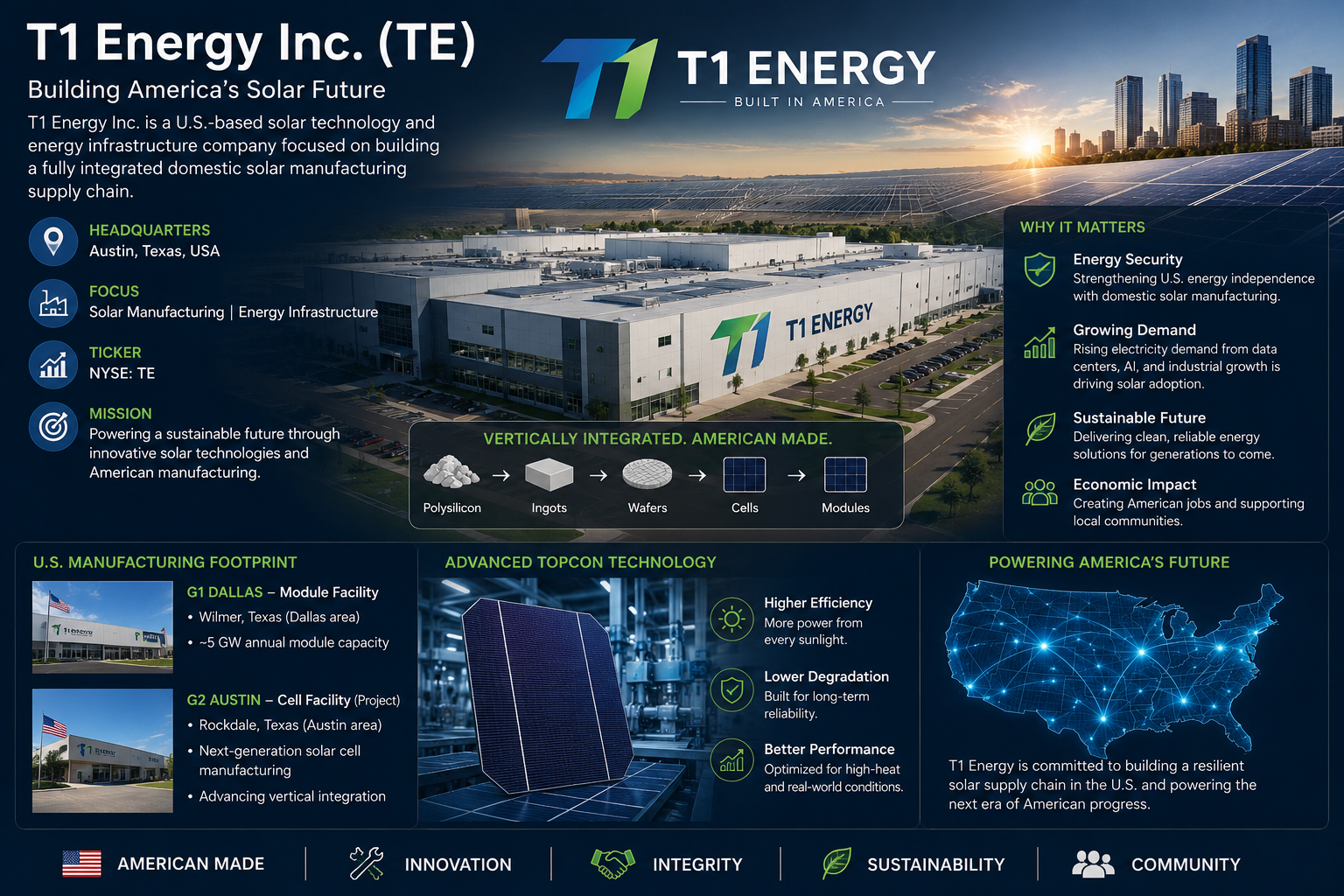
T1 Energy Inc. (NYSE: TE), formerly FREYR Battery, has repositioned itself as a U.S.-focused solar manufacturing company seeking to capitalize on growing electricity demand driven by artificial intelligence, data centers, electrification, and industrial reshoring. As the United States increasingly prioritizes domestic energy production and supply-chain security, T1 aims to establish itself as a meaningful participant in the nation’s renewable energy ecosystem.
Core Growth Engines
T1’s primary growth drivers are its G1 Dallas solar module facility and the G2_Austin solar-cell manufacturing project. Together, these assets support the company’s goal of building a vertically integrated domestic solar supply chain. Rising electricity demand from AI infrastructure and data centers may further strengthen long-term demand for solar generation. Investors interested in broader AI-driven infrastructure trends may also find value in NVIDIA Corporation (NVDA): Outlook on Core Growth Engines, Emerging Risks, Bull vs Bear Case, and Long-Term Investor Value.
Emerging Risks
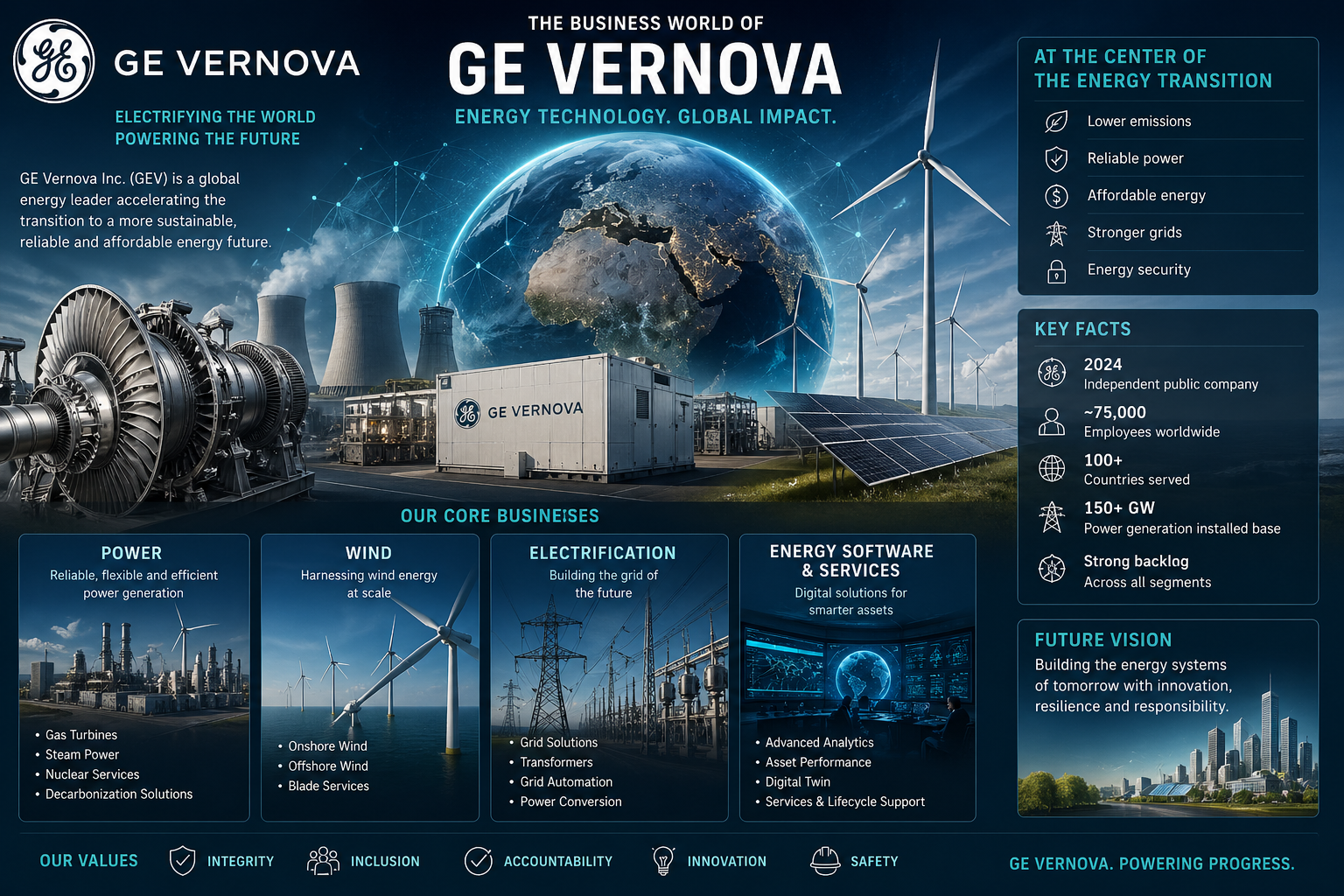
The company faces substantial execution risks related to facility construction, production ramp-up, and cost management. Additional capital requirements could result in shareholder dilution, while intense competition from global solar manufacturers may pressure margins. Changes in renewable-energy incentives or trade policies could also affect future profitability. Similar challenges are discussed in GE Vernova Inc. (GEV): Outlook on Core Growth Engines, Emerging Risks, Bull vs Bear Case, and Long-Term Investor Value.
Bull Case
The bullish scenario assumes successful execution of T1’s manufacturing strategy, strong demand for domestically produced solar products, and continued government support for U.S. clean-energy manufacturing. Under this outcome, T1 could strengthen its competitive position and benefit from long-term growth in energy infrastructure. Investors exploring comparable infrastructure opportunities may find Constellation Energy Corporation (CEG): Outlook on Core Growth Engines, Emerging Risks, Bull vs Bear Case, and Long-Term Investor Value relevant.
Bear Case
The bearish scenario centers on project delays, higher-than-expected costs, weak manufacturing economics, additional financing needs, and persistent industry competition. If operational execution falls short of expectations, the company may struggle to achieve sustainable profitability. These risks resemble concerns often associated with emerging technologies, as discussed in NuScale Power Corporation (SMR): Outlook on Core Growth Engines, Emerging Risks, Bull vs Bear Case, and Long-Term Investor Value.
Investor Value
T1 offers exposure to several long-term investment themes, including domestic manufacturing, energy security, renewable energy adoption, and rising electricity consumption. The company’s strategy aligns with broader trends shaping the future of American infrastructure and industrial policy. Investors interested in long-term energy transitions may also benefit from reading Who Are the Major Energy Companies Entering SMR (Small Modular Reactors) and Have the Biggest 5–10x Potential (by 2035)?
Long-Term Investor Value & Conclusion
T1 Energy remains a high-risk, high-reward investment. The company’s future success depends largely on management’s ability to execute its manufacturing expansion, control costs, and achieve profitable growth. If successful, T1 could become an important beneficiary of America’s next energy and infrastructure cycle. However, investors should remain mindful of execution, financing, competitive, and policy risks. For a broader perspective on evaluating investment opportunities across different sectors and market environments, readers may find Bull vs Bear Case: Comparative Risk Assessment particularly useful.
Disclaimer: This content is provided for informational and educational purposes only and should not be considered investment advice, financial advice, or a recommendation to buy or sell any security. Investors should conduct their own research and consult a qualified financial advisor before making investment decisions. Past performance does not guarantee future results, and all investments involve risk, including the potential loss of principal.
Share this:

Discover more from The Finance Compass
Subscribe to get the latest posts sent to your email.