Redwire Corporation (RDW): Outlook on Core Growth Engines, Emerging Risks, Bull vs Bear Case, and Long-Term Investor Value

Thank you for reading this post, don't forget to subscribe!
*Disclaimer: This content is for informational and educational purposes only and does not constitute financial, investment, legal, or tax advice. Investing in stocks and aerospace-related companies involves risk, including potential loss of principal. Readers should conduct their own research and consult a qualified financial advisor before making investment decisions. Opinions expressed are based on publicly available information believed to be reliable at the time of publication.
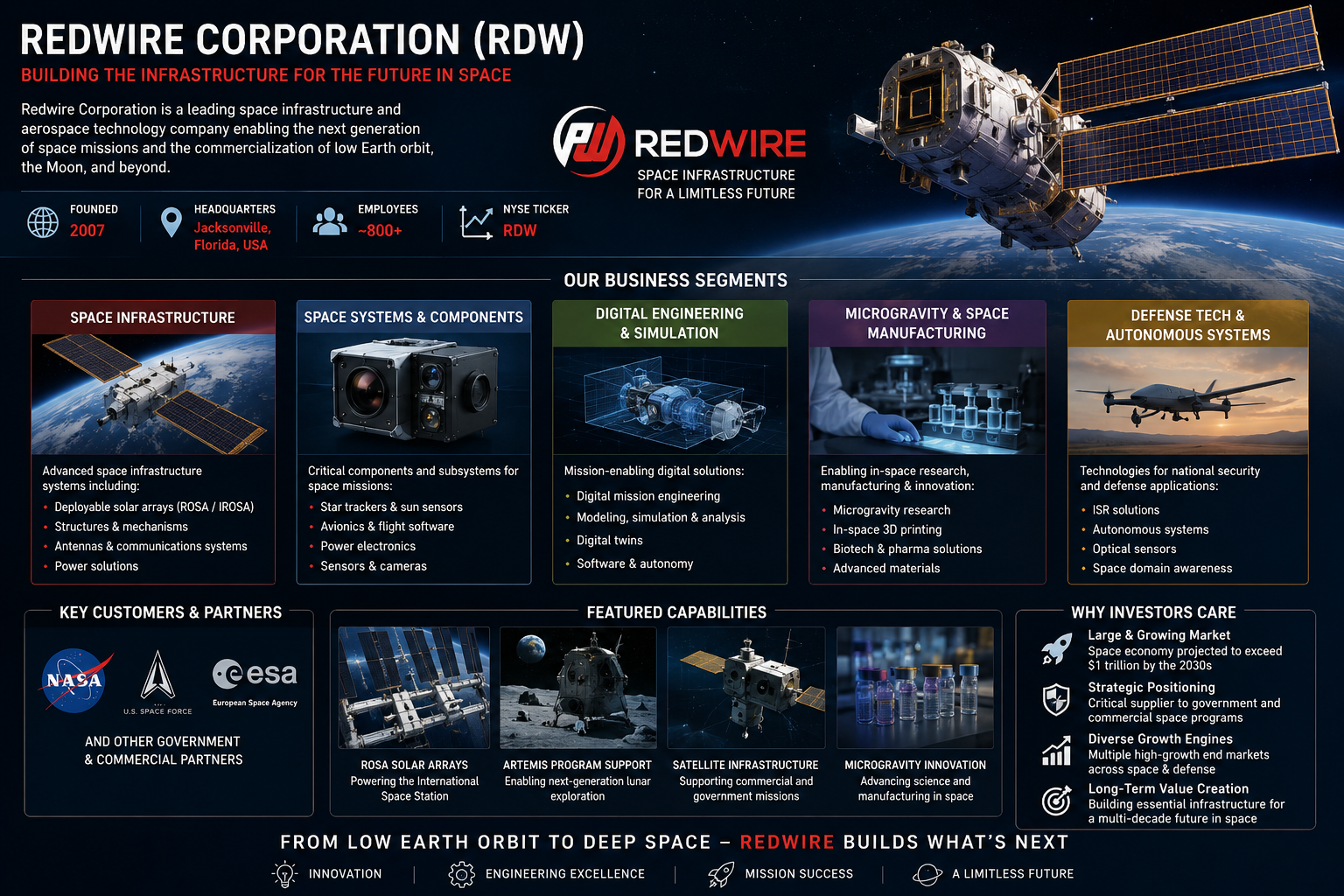
The global space economy is gradually evolving from a government-dominated sector into a broader commercial and strategic ecosystem shaped by satellite communications, defense modernization, lunar exploration, and orbital infrastructure. Within this transformation, Redwire Corporation has emerged as a specialized aerospace and space infrastructure company focused on high-value engineering systems for government and commercial missions.
Unlike traditional aerospace conglomerates, Redwire operates across several niche but strategically important segments, including deployable solar arrays, spacecraft avionics, digital engineering, autonomous systems, and microgravity manufacturing. Its positioning reflects broader themes already discussed across The Finance Compass in areas such as AI infrastructure, semiconductor ecosystems, advanced aerospace systems, and long-duration innovation investing.
Core Growth Engines
Space Infrastructure and Orbital Systems
One of Redwire’s strongest competitive advantages lies in its deployable space infrastructure technologies, especially its ROSA and IROSA solar arrays used in orbital missions and International Space Station upgrades.
As discussed in GE Aerospace: Outlook on Growth Drivers, Strategic Risks, and Long-Term Investor Value, next-generation aerospace platforms increasingly depend on lightweight, high-efficiency systems capable of supporting autonomous operations, communications, and advanced sensing technologies. Redwire’s infrastructure portfolio directly benefits from these long-term aerospace modernization trends.
The expansion of satellite constellations, Earth observation systems, and defense-related orbital assets could continue supporting demand for deployable power and spacecraft systems over the coming decade.
Defense Spending and National Security Priorities
Geopolitical tensions have significantly increased global investment in defense-space technologies.
Redwire participates in areas connected to:
- space-based surveillance,
- mission avionics,
- navigation systems,
- ISR technologies,
- autonomous aerospace systems.
These trends mirror broader defense and infrastructure themes explored in Palantir Technologies Inc.: Assessing Growth Drivers, Strategic Risks, and Long-Term Value Creation, where governments increasingly prioritize AI-driven situational awareness, resilient infrastructure, and integrated defense ecosystems.
If U.S. and allied governments continue prioritizing orbital resilience and military modernization, Redwire may benefit from sustained strategic demand.
Lunar Exploration and the Artemis Economy
Redwire also maintains exposure to long-duration lunar and deep-space initiatives tied to NASA and the Artemis program.
Although commercial lunar economics remain early-stage, companies securing technological positioning today may gain long-term advantages if lunar infrastructure eventually scales into a viable commercial ecosystem.
This aligns with broader future-oriented aerospace investment themes discussed in What’s Next for SpaceX (SPAX.PVT): The Roadmap to Starship, Starlink, and a Multi-Planet Future, where orbital logistics, reusable infrastructure, and deep-space commercialization could reshape entire industrial sectors over multiple decades.
Microgravity Manufacturing and Advanced Research
One of Redwire’s most speculative but potentially disruptive business areas involves microgravity manufacturing and space-based research.
The company has explored technologies connected to:
- pharmaceutical development,
- biological experiments,
- advanced fiber optics,
- in-space 3D printing,
- biotechnology manufacturing.
This segment remains highly experimental, but it reflects broader innovation themes increasingly visible across advanced technology markets. Similar long-duration investment thinking can also be observed in Quantum Computing Inc. (QUBT): Outlook on Core Growth Engines, Emerging Risks, Bull vs Bear Case, and Long-Term Investor Value, where early-stage technologies may require years before reaching scalable commercialization.
If even a small portion of orbital manufacturing becomes economically viable, companies with early infrastructure exposure could hold significant strategic advantages.
Emerging Risks
Dependence on Government Budgets
A major risk for Redwire remains its exposure to government spending cycles.
Changes in:
- NASA funding priorities,
- defense appropriations,
- geopolitical strategy,
- procurement timelines,
could materially impact future contract growth.
This type of dependency risk is common across capital-intensive technology industries, particularly those discussed in NuScale Power Corporation (SMR): Outlook on Core Growth Engines, Emerging Risks, Bull vs Bear Case, and Long-Term Investor Value, where long-duration infrastructure development depends heavily on policy support and regulatory continuity.
Profitability and Execution Challenges
Like many emerging aerospace and advanced technology firms, Redwire faces ongoing profitability pressures.
The company continues investing heavily in:
- engineering talent,
- acquisitions,
- R&D,
- manufacturing capabilities,
- mission integration systems.
Execution risk remains important because scaling aerospace manufacturing is operationally difficult and capital intensive. Similar concerns appear frequently in rapidly growing infrastructure businesses such as those discussed in CoreWeave, Inc. (CRWV): Outlook on Core Growth Engines, Emerging Risks, Bull vs Bear Case, and Long-Term Investor Value, where growth expectations can outpace operational stability if costs rise too quickly.
Competitive Pressure
Redwire competes with both established aerospace contractors and venture-backed space startups.
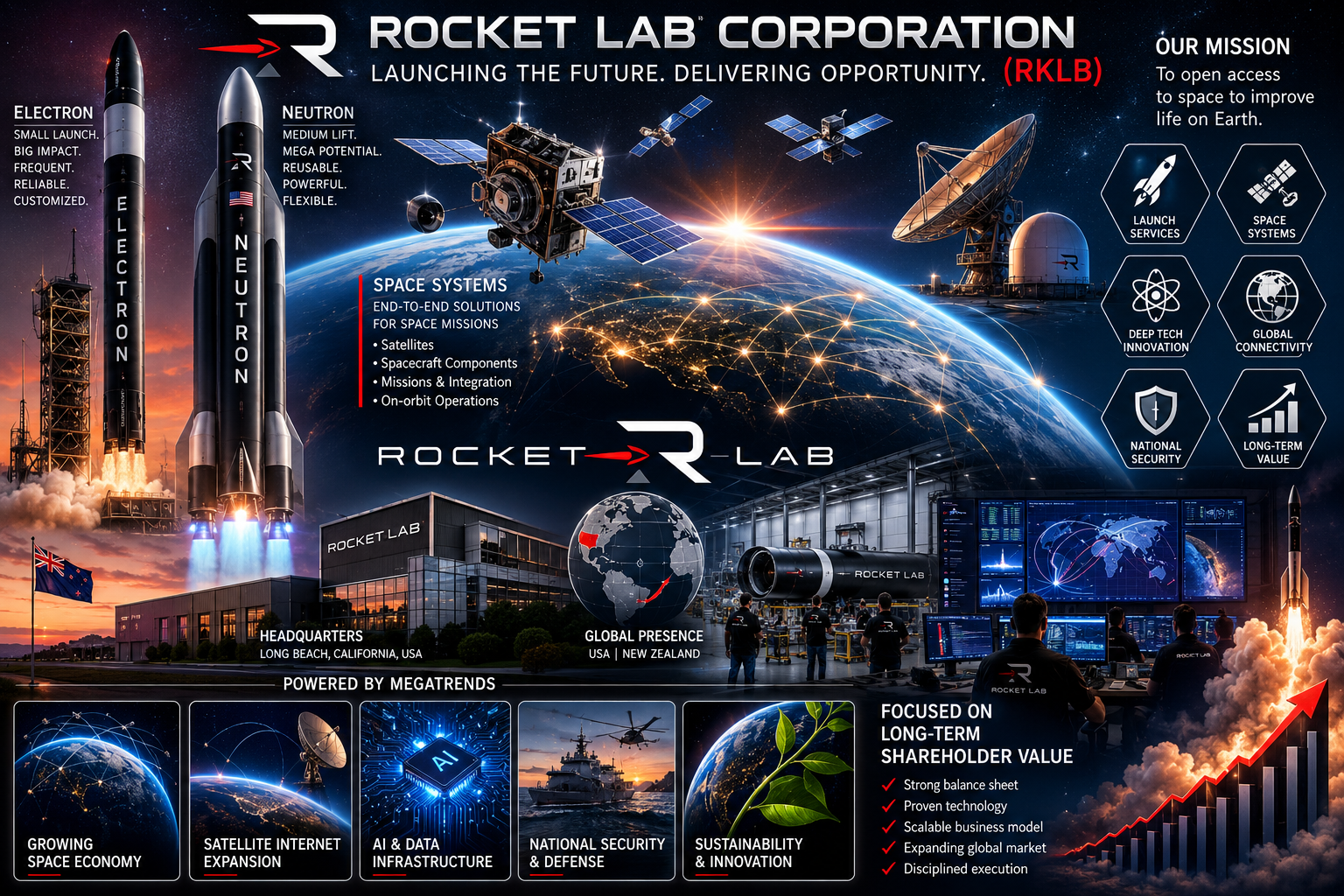
Major competitors and ecosystem rivals include:
Competition may intensify if commercial space demand develops more slowly than investors currently expect. Similar competitive saturation risks are explored in NVIDIA Corporation (NVDA): Outlook on Core Growth Engines, Emerging Risks, Bull vs Bear Case, and Long-Term Investor Value, where technological leadership must continuously evolve to maintain strategic advantages.
Bull Case
The bullish thesis for Redwire centers on the belief that orbital infrastructure may become one of the defining industrial growth themes of the next several decades.
Bullish investors argue that:
- satellite infrastructure demand will expand structurally;
- defense-space budgets will remain elevated;
- lunar and deep-space ecosystems will gradually commercialize;
- Redwire owns strategically valuable niche technologies.
This broader investment framework aligns with themes explored in Artificial Intelligence and the Future of Investment Strategy in the United Kingdom, where investors increasingly focus on foundational infrastructure providers rather than only consumer-facing platforms.
If Redwire successfully improves operational efficiency while maintaining technological relevance, the company could evolve into a meaningful mid-tier space infrastructure platform.
Bear Case
The bearish argument focuses primarily on financial sustainability and uncertainty surrounding the long-term commercialization of the space economy.
Critics argue that:
- many projected space-economy opportunities remain speculative;
- commercialization timelines could take far longer than expected;
- government dependence creates policy vulnerability;
- sustained profitability may remain difficult.
These concerns resemble broader speculative-growth risks discussed in Plug Power Inc. (PLUG: Outlook on Core Growth Engines, Emerging Risks, Bull vs Bear Case, and Long-Term Investor Value, where ambitious long-term visions sometimes collide with near-term financial realities.
If Redwire fails to achieve durable free cash flow generation, investor sentiment could remain volatile despite strong technological positioning.
Long-Term Investor Value
For long-term investors, Redwire represents a high-risk, high-upside exposure to the future of space infrastructure and orbital industrialization.
Its investment profile depends heavily on whether several structural trends continue accelerating:
- defense-space modernization,
- satellite proliferation,
- orbital infrastructure expansion,
- lunar exploration,
- advanced in-space manufacturing.
These themes increasingly overlap with the broader infrastructure transformation discussed in Global Market Trends 2025: Key Analysis and Insights for Investors, where AI, aerospace, energy systems, and strategic manufacturing are becoming interconnected pillars of long-duration capital investment.
However, investors should also recognize that Redwire remains an emerging aerospace company operating in a volatile, capital-intensive industry where execution quality matters enormously.
Conclusion
Redwire Corporation occupies a unique position within the evolving global space economy. Its portfolio spans orbital infrastructure, defense technologies, lunar systems, and experimental microgravity manufacturing – all areas that may experience substantial long-term strategic importance if commercialization trends continue.
At the same time, the company faces significant risks tied to competition, profitability, government dependence, and execution complexity.
Ultimately, Redwire’s long-term investment outcome may depend on whether the space economy evolves from a promising narrative into a durable industrial reality. If orbital infrastructure becomes as strategically important in the future as cloud infrastructure is today, Redwire could emerge as an increasingly valuable participant in the next era of aerospace and industrial innovation.
*Disclaimer: This content is for informational and educational purposes only and does not constitute financial, investment, legal, or tax advice. Investing in stocks and aerospace-related companies involves risk, including potential loss of principal. Readers should conduct their own research and consult a qualified financial advisor before making investment decisions. Opinions expressed are based on publicly available information believed to be reliable at the time of publication.
Share this:

Discover more from The Finance Compass
Subscribe to get the latest posts sent to your email.