Who are the major energy companies entering SMR (small modular reactors) and have the biggest 5-10x potential (by 2035)?

Thank you for reading this post, don't forget to subscribe!
*Disclaimer: This content is for informational and educational purposes only and does not constitute financial, investment, or legal advice. Investing in equities, especially in emerging sectors like nuclear energy and SMRs, involves significant risk, including the potential loss of capital. Always conduct your own research or consult a qualified financial advisor before making investment decisions.
The global race to commercialize small modular reactors (SMRs) is no longer theoretical – it is unfolding in real time. More than 60 companies across multiple continents are developing SMR technologies, supported by governments seeking energy security and by private capital anticipating the next multi-trillion-dollar infrastructure cycle. At the same time, the rise of artificial intelligence, electrification, and data center demand is reshaping energy consumption patterns – an intersection explored in broader investment frameworks such as Artificial Intelligence and the Future of Investment Strategy in the United Kingdom (The Finance Compass).
Against this backdrop, a critical question emerges: which major energy companies entering SMRs have the realistic potential to deliver 5-10× returns by 2035? The answer lies not just in technology, but in execution, regulatory progress, and alignment with macro demand.
1. Incumbent giants entering SMRs
The first category includes large, established energy and industrial companies. These players bring capital, regulatory experience, and global relationships – but typically offer more limited upside compared to smaller disruptors.
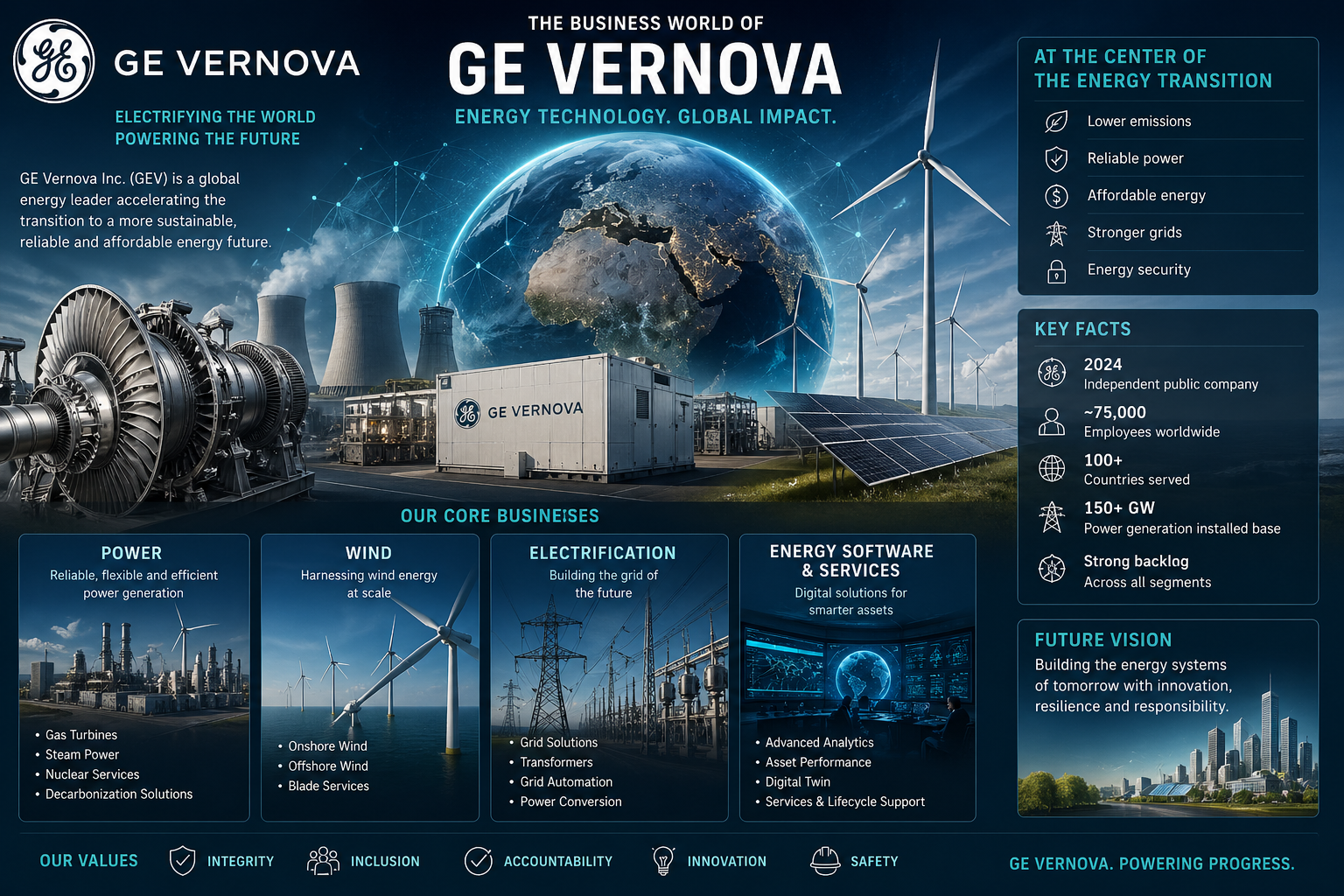
GE Vernova / GE Hitachi Nuclear Energy
GE’s BWRX-300 reactor is among the most deployment-ready SMR designs in the Western world. Its advantage lies in decades of nuclear experience and existing utility partnerships. From an investment perspective, its profile resembles large-scale industrial plays discussed in GE Vernova Inc. (GEV): Outlook on Core Growth Engines, Emerging Risks, Bull vs Bear Case, and Long-Term Investor Value (The Finance Compass).
EDF (Nuward SMR)
Backed by the French state, EDF is focused on standardized European SMR exports. While execution probability is high, upside is constrained by government ownership and capital structure.
Rolls-Royce Holdings (SMR division)
The UK’s national SMR program provides one of the clearest commercialization pathways in Europe. Government backing reduces risk, but also moderates extreme valuation expansion.
Korea Hydro & Nuclear Power (KHNP)
South Korea’s nuclear sector is known for delivering projects on time and budget – an underrated competitive advantage in a capital-intensive industry.
China National Nuclear Corporation (CNNC)
China is likely to deploy SMRs at scale first, though access for global investors remains limited.
Conclusion for this group:
These companies are highly likely to succeed operationally, but their size and structure make 5-10× returns unlikely. They are stability plays, not exponential bets.
2. Hybrid leaders: institutional backing + venture upside
The second category offers the most attractive balance between execution probability and upside potential.
X-energy
Backed by major institutional capital and strategic partners like Amazon, X-energy is positioned at the intersection of nuclear power and hyperscale data centers. Its dual revenue model (reactor + fuel) introduces recurring income streams – similar to platform strategies discussed in Amazon’s Strategic Outlook: Core Growth Engines, Emerging Risks, and Long-Term Investor Value (The Finance Compass).
TerraPower
Founded by Bill Gates, TerraPower’s Natrium reactor integrates nuclear generation with energy storage. This hybrid model addresses intermittency – one of the key barriers to renewable-dominated grids.
Kairos Power
Kairos has achieved a rare milestone: regulatory approval to build an advanced reactor in the U.S. Its fluoride salt–cooled design represents a technically credible alternative to traditional water-cooled systems.
Conclusion for this group:
These companies combine credible execution pathways with meaningful upside, making them strong candidates for 5×-10× outcomes if commercialization milestones are achieved.
3. Pure-play SMR companies: highest asymmetry
The third category includes smaller, publicly traded or venture-backed companies. These are the highest-risk, highest-reward opportunities.
Oklo Inc.
Oklo focuses on compact microreactors for off-grid applications such as military bases and remote industrial sites. Its decentralized model aligns with emerging distributed energy trends.
NuScale Power
NuScale remains the only company with full U.S. Nuclear Regulatory Commission (NRC) design certification. This regulatory milestone is a significant competitive moat, even though project execution has faced setbacks. Its investment profile is explored in NuScale Power Corporation (SMR): Outlook on Core Growth Engines, Emerging Risks, Bull vs Bear Case, and Long-Term Investor Value (The Finance Compass).
Nano Nuclear Energy
A highly speculative player focused on portable nuclear solutions. The upside is substantial, but so is the uncertainty.
Conclusion for this group:
These companies represent the only realistic path to 10× returns, but with elevated execution and financing risks.
4. The overlooked winners: fuel, uranium, and infrastructure
A critical but often underestimated insight is that reactor developers are only one part of the value chain.
Fuel and enrichment
SMRs require HALEU (high-assay low-enriched uranium), creating a supply bottleneck and potential pricing power.
Uranium producers
If SMRs scale globally, uranium demand will rise structurally.
Utilities adopting SMRs
Utilities provide more stable exposure, as discussed in Constellation Energy Corporation (CEG): Outlook on Core Growth Engines, Emerging Risks, Bull vs Bear Case, and Long-Term Investor Value (The Finance Compass).
5. What actually drives 5-10× returns (2026 – 2035)
Across all categories, the same catalysts determine long-term outcomes:
1. First commercial deployment
The first company to deliver a functioning, grid-connected SMR will unlock global demand.
2. Regulatory approval
Licensing – not technology – is the primary bottleneck.
3. Manufacturing scale
Mass production (factory-built reactors) is essential for cost reduction.
4. AI-driven energy demand
The exponential growth of AI infrastructure – highlighted in NVIDIA’s AI Dominance: A Growth Story with Long-Term Investment Potential (The Finance Compass) – is creating unprecedented electricity demand, positioning SMRs as a baseload solution.
5. Government support
Public funding and policy frameworks remain decisive.
Final conclusion
The SMR sector is transitioning from experimental technology to deployable infrastructure. Unlike previous clean energy cycles, this one is driven by structural demand – AI, electrification, and energy security.
The most likely outcome is a multi-layered ecosystem:
- Large incumbents dominate deployment
- Hybrid players capture scalable market share
- A small number of disruptors generate outsized returns
For investors targeting 5-10× returns by 2035, the key inflection point is clear:
the first successful commercial reactor deployment.
In nuclear energy, that milestone changes everything – once a design is proven, global replication follows, and valuations can reprice dramatically.
*Disclaimer: This content is for informational and educational purposes only and does not constitute financial, investment, or legal advice. Investing in equities, especially in emerging sectors like nuclear energy and SMRs, involves significant risk, including the potential loss of capital. Always conduct your own research or consult a qualified financial advisor before making investment decisions.
Share this:

Discover more from The Finance Compass
Subscribe to get the latest posts sent to your email.