ASML Holding N.V. (ASML): Outlook on Core Growth Engines, Emerging Risks, Bull vs Bear Case, and Long-Term Investor Value

Thank you for reading this post, don't forget to subscribe!
*Disclaimer: This content is for informational and educational purposes only and does not constitute investment advice, financial advice, or a recommendation to buy or sell any securities. Always conduct your own research or consult a qualified financial advisor before making investment decisions.
Introduction
ASML Holding N.V. is a Dutch multinational that dominates the global semiconductor lithography market, particularly through its Extreme Ultraviolet (EUV) lithography machines – the indispensable tools for manufacturing the most advanced microchips. As semiconductors become more critical for artificial intelligence (AI), data centers, communications, and automotive computing, ASML’s role in the global technology supply chain has become central to future technology adoption and geopolitical industrial strategy.
Core Growth Engines
1. Leadership in EUV Technology
ASML is the only company in the world that commercially produces EUV lithography equipment, which is required to produce advanced chips at nodes of 7 nanometers and below. This gives it a unique and near-unassailable position in the value chain of cutting-edge semiconductor fabrication. The complexity of EUV (involving light sources, ultra-precise mirrors, and years of engineering) has created extremely high barriers to entry for any competitor.
2. Secular Demand from AI and Advanced Computing
The rise of AI applications has driven exponential demand for advanced semiconductors, which in turn fuels orders for EUV tools and their future generations, such as High-NA EUV systems designed for sub-2 nm chip production. In 2025, ASML reported record profits largely due to AI-driven demand and renewed customer investment plans, especially from leading foundries.
Inside TSMC’s 2025 Outlook: Growth Drivers, Competitive Risks & Long-Term Value
3. Installed Base and Recurring Service Revenue
Beyond new system sales, ASML generates significant recurring revenue from service contracts, maintenance, and upgrades on installed lithography systems. These high-margin revenue streams are increasingly important as lithography machines become long-lasting capital assets embedded in fab production lines.
4. Expansion of Semiconductor Ecosystems
Initiatives like the European Union’s NanoIC pilot line (supported in part by ASML) aim to broaden the geographic footprint of advanced semiconductor development. The deployment of ASML’s High-NA EUV systems in such collaborations highlights its influence in shaping global manufacturing capabilities.
Emerging Risks
1. Geopolitical and Export Control Challenges
One of the most significant constraints on ASML’s growth has been export restrictions, especially to China. U.S.-led controls prevent the sale of advanced EUV machines to Chinese customers, who have historically represented a meaningful portion of ASML’s revenue. These restrictions have the dual effect of reducing the company’s addressable market and incentivising Chinese efforts to develop indigenous lithography technologies.
2. Supply Chain Complexity and Dependencies
ASML’s machines integrate over 100,000 parts from a global network of highly specialised suppliers. Key components (notably optical systems from Carl Zeiss) are single-source dependencies. Any disruption, whether due to geopolitical shifts, supplier constraints, or logistics issues, could meaningfully delay production and deliveries.
3. Customer Concentration and Cyclicality
A small number of major chipmakers (such as TSMC, Samsung, and Intel ) account for a large share of ASML’s revenue. This concentrated customer base creates exposure to individual companies’ investment cycles and strategic shifts. Moreover, the broader semiconductor industry is cyclical, meaning capital expenditure can fluctuate with macroeconomic conditions.
Intel (INTC) Outlook 2025: Can AI, IDM 2.0, and Foundry Expansion Drive a Real Turnaround?
4. Technological and Execution Risks
While ASML’s technological moat is profound, executing on future technology roadmaps (especially High-NA EUV) remains complex and resource-intensive. Delays, performance issues, or escalation of costs could undermine growth expectations. There’s also a long-tail possibility that disruptive technologies (like nanoimprint lithography) could materially alter the lithography landscape, though such threats remain speculative today.
Global Market Trends 2025: Key Analysis and Insights for Investors
Bull vs. Bear Case
Bull Case
In a bullish view, ASML stands to benefit from continuing secular growth in semiconductors driven by AI, cloud computing, autonomous systems, and next-generation consumer electronics. Its monopoly in EUV and future generations like High-NA EUV positions it as an indelible enabler of Moore’s Law continuation. Long-term projections see significant revenue growth through the end of the decade, supported by continued investments from leading foundries and robust order backlogs. Analysts have even revised forecasts upward for the late 2020s, expecting stronger earnings expansion as lithography intensity increases.
Bull vs Bear Case: Comparative Risk Assessment
Bear Case
The bear case centers on geopolitics, cyclical downturns, and execution risk. Restrictive export controls could permanently limit sales to a major market like China. Broader geopolitical conflict, especially involving Taiwan and the semiconductor supply chain, might disrupt manufacturing and ordering cycles. Additionally, if customers delay purchases during economic downturns (or if alternative chipmaking paradigms emerge) ASML’s premium valuation could face downward pressure. Higher R&D costs and technological execution challenges also weigh on the near-term outlook.
Long-Term Investor Value
For long-term investors, ASML represents a unique exposure to the core infrastructure of future computing technologies. Its near-monopoly on EUV tools and growing installed base create durable competitive advantages and a large, sticky revenue pool. Even accounting for cyclical downturns and geopolitical headwinds, secular demand for advanced chips driven by AI, data centers, and edge computing suggests potential for sustained growth over decades.
However, investors should be aware that much of this potential is already priced into the stock – ASML typically trades at premium valuations reflecting its dominant market position and future expectations. This means that while the company’s fundamentals may be strong, valuation risk and execution risk remain material.
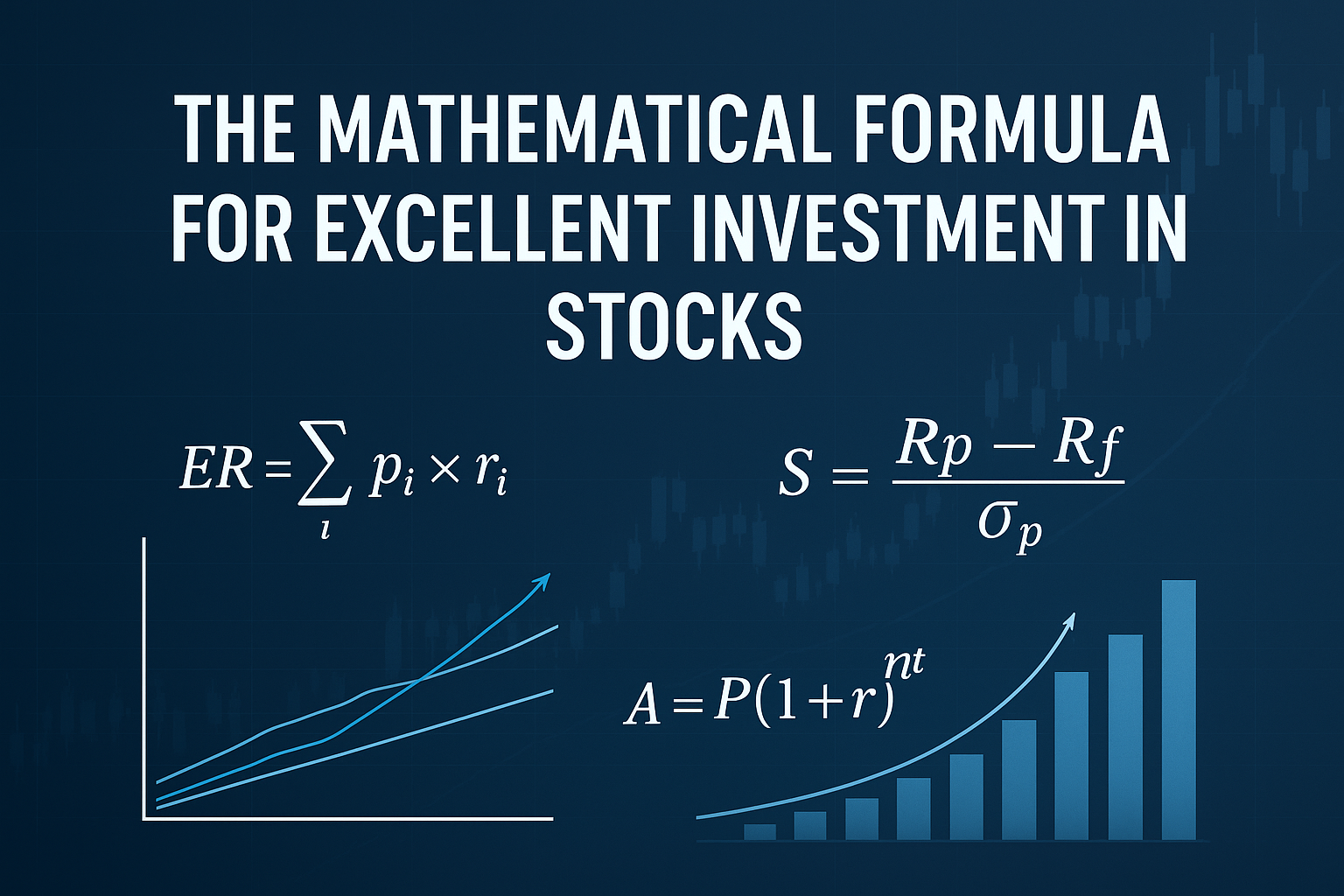
The Mathematical Formula for Excellent Investment in Stocks
Conclusion
ASML is a linchpin of the global semiconductor ecosystem and a critical enabler of advanced technology adoption worldwide. Its leadership in EUV lithography provides powerful growth drivers, yet emerging geopolitical constraints, supply chain complexity, and execution hurdles temper its outlook. For investors with a long time horizon, the company offers compelling exposure to secular technology growth, but should be weighed against valuation levels and external risks. Alongside a diversified portfolio and an understanding of semiconductor industry cycles, ASML remains one of the most compelling (and cautiously optimistic) investment narratives in global technology markets.
SPDR S&P 500 ETF (SPY): Outlook on Core Growth Engines, Emerging Risks, and Long-Term Investor Value
*Disclaimer: This content is for informational and educational purposes only and does not constitute investment advice, financial advice, or a recommendation to buy or sell any securities. Always conduct your own research or consult a qualified financial advisor before making investment decisions.